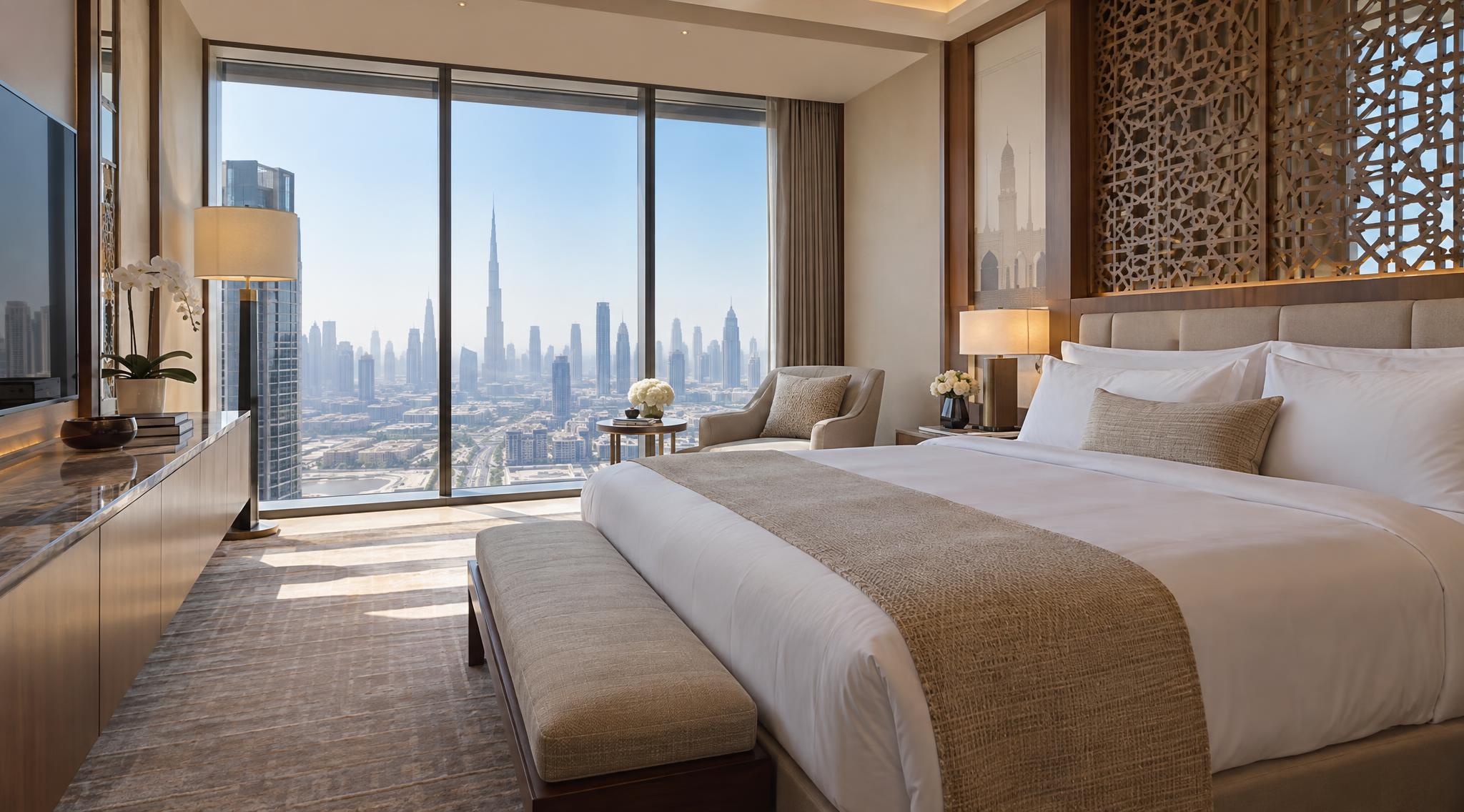
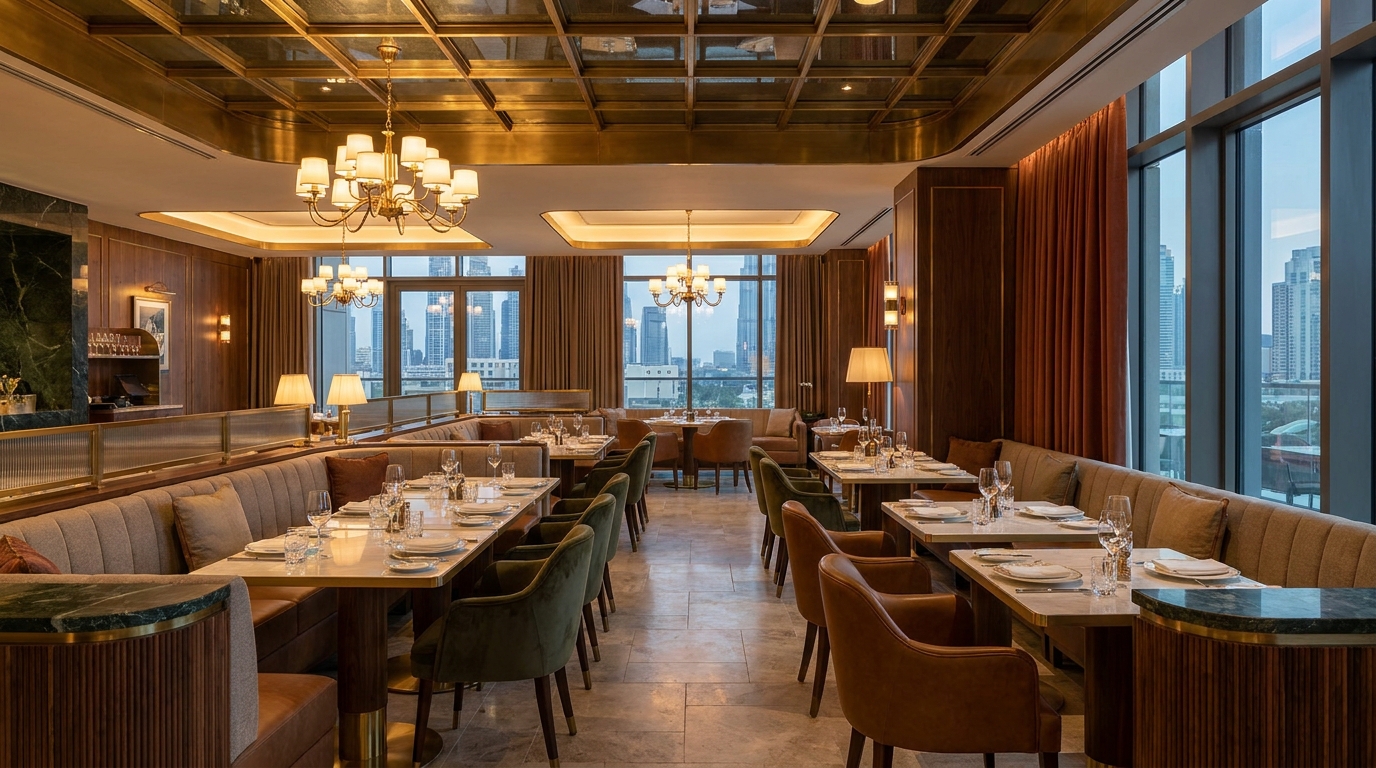
A designer specifying furniture for a brand-new 300-key resort and a designer refreshing a 15-year-old boutique hotel may select the same chair. But the procurement timeline, delivery logistics, material constraints, and budget allocation behind that chair are entirely different.
The UAE and GCC hospitality market is running both project types at unprecedented scale. Dubai continues adding thousands of new hotel rooms — with major openings from Jumeirah Marsa Al Arab to Corinthia Dubai and Ciel Dubai Marina scheduled through 2026–2028. Simultaneously, established properties built during the 2005–2015 boom are entering their first or second refurbishment cycles. Kimpton Dubai is converting the former Crowne Plaza Business Bay. Four Seasons Resort Ajman is taking over from The Oberoi at Al Zorah. Mövenpick Bur Dubai has launched an extensive renovation of its meetings facilities and apartment interiors.
For designers and procurement professionals managing these projects, understanding how hotel renovation furniture strategy differs from new build specification isn’t academic knowledge. It directly affects timelines, budgets, and outcomes.
Timeline and Phasing: The Fundamental Difference
New builds follow a linear construction timeline. Renovations follow the hotel’s operational reality. This single distinction reshapes every aspect of furniture procurement.
In a new build, furniture procurement runs in parallel with construction. Long lead times — often 16 to 24 weeks for custom hospitality furniture — are absorbed into the overall build schedule. All rooms are furnished simultaneously, enabling volume pricing and consolidated delivery logistics. The handover point is clear: furniture arrives when construction completes, with no guest interference to navigate.
Renovations operate under entirely different constraints. Phased delivery becomes the norm — floor by floor, wing by wing, or zone by zone. The hotel typically remains operational throughout, meaning furniture must arrive in precise batches aligned with each construction phase. A single late shipment doesn’t just delay a delivery — it can halt an entire floor’s completion and block revenue generation.
Seasonal timing adds another layer. In the UAE, renovations are frequently scheduled during low-occupancy summer periods to minimize revenue impact. This compresses the available window for hotel renovation furniture delivery into a few critical months where every week counts.
The practical implication for designers is significant. Hotel renovation furniture procurement requires a logistics plan as detailed as the design plan itself. Phased delivery coordination, staging, warehousing, and just-in-time scheduling become critical disciplines — not afterthoughts.
Working Within Structural Constraints
A new build offers a blank canvas. Furniture is specified to match the architectural vision, with ceiling heights, floor plans, and spatial flow designed around the desired guest experience. Custom dimensions and bespoke pieces are standard. There are no legacy infrastructure limitations.
Renovations demand creative problem-solving within existing parameters. Existing structural and mechanical constraints — floor-to-ceiling heights, column placements, door widths, elevator dimensions — directly limit furniture choices. Custom millwork may need to accommodate plumbing, electrical, or HVAC systems that aren’t being relocated. Older properties frequently have non-standard room dimensions, meaning furniture that fits perfectly in a new build’s standard 28-square-meter room won’t necessarily work in a 1990s-era 24-square-meter layout.
Delivery access presents its own challenges. Oversized pieces that work beautifully in a new build — delivered before walls close and corridors narrow — may not physically fit through a renovated property’s existing elevators and hallways. Coordinating deliveries of materials and fixtures in properties with limited staging space adds complexity that new builds rarely encounter.
The lesson is straightforward. Hotel renovation furniture specification starts with measuring what exists, not imagining what could be. Site surveys and as-built drawings are non-negotiable before any furniture selection begins. Experienced suppliers understand this reality and can advise on which pieces adapt to constrained environments — and which ones will create problems on installation day.

Budget Allocation: Where Furniture Sits in the Numbers
FF&E sits differently in renovation budgets versus new build budgets, and understanding this difference prevents costly misalignment between design ambition and financial reality.
In new builds, FF&E typically accounts for 7 to 10 percent of total construction costs, with furniture representing roughly 30 to 40 percent of that FF&E budget. Economies of scale apply: ordering 300 identical guestroom sets in a single production run yields meaningful per-unit savings. The budget is planned from project inception as part of the overall development pro forma, with clear allocation and minimal competition from unexpected expenses.
Renovation budgets tell a different story. FF&E often becomes the largest controllable expense, because structural work is dictated by building condition rather than design preference. Industry-standard renovation budget allocation typically breaks down as approximately 30 percent for soft goods, 20 percent for case goods and furniture, 20 percent for bathrooms, 10 percent for design fees, 10 percent for construction, and 10 percent for contingency.
That contingency exists for good reason. The “hidden cost” trap is a recurring reality in renovations — unexpected structural discoveries like outdated wiring, water damage, or deteriorated plumbing can suddenly consume budget originally allocated for furniture upgrades. Smaller, phased orders also lose the volume pricing advantage that new builds enjoy.
The cost ranges reflect these dynamics clearly. Soft renovations typically run $2,000 to $8,000 per room, while hard renovations range from $15,000 to $35,000 per room. Luxury full renovations can exceed $75,000 to $100,000 per room.
For designers specifying hotel renovation furniture, this means durability becomes a financial decision as much as a design one. Longer-lifecycle pieces reduce total cost of ownership when the next refurbishment cycle may be seven to ten years away and budget for interim replacements is unlikely.
Durability Specifications: Different Stress, Different Standards
New build furniture enters a pristine environment — clean, controlled, with no construction dust and no guest traffic during installation. Renovation furniture enters an entirely different reality.
In a phased renovation, furniture arrives in an active environment. Adjacent construction zones generate dust. Freshly plastered or painted walls create humidity. Pieces may be staged in temporary storage before installation or delivered through active construction corridors where accidental damage is a genuine risk. Packaging and protection specifications matter significantly more — furniture may sit in warehousing for weeks before its designated zone is ready to receive it.
There’s an operational durability factor as well. Properties that remain partially open during renovation compress guest traffic into fewer available rooms and public spaces. This means furniture in completed zones absorbs higher-than-normal usage rates until the full property reopens. Lobbies handling the same guest volume with reduced seating, restaurants operating at full capacity with fewer available dining zones — these transitional conditions test furniture in ways that normal operations do not.
The specification guidance is clear: commercial-grade durability is a minimum for renovation projects. The transition period alone subjects furniture to conditions that residential or light-commercial grades simply cannot handle.
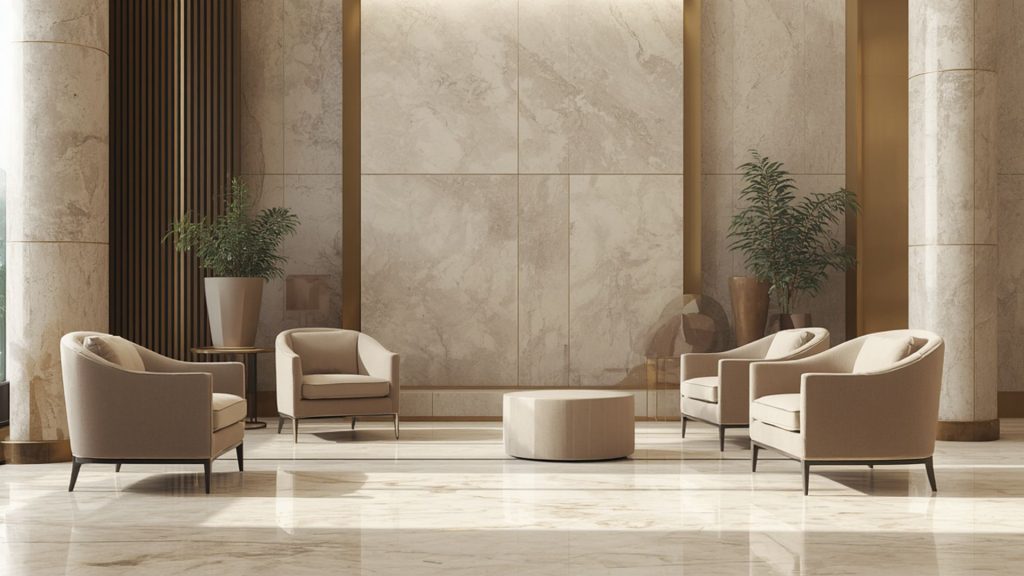
The Single-Supplier Advantage
Managing multiple furniture vendors is complex in any hospitality project. In renovations, it becomes a measurable operational risk.
In a new build, coordinating several suppliers around a single handover date is manageable. The delivery window is defined, the site is accessible, and all furniture arrives within a concentrated period. In a renovation, phased delivery across months means each supplier must independently align with an evolving construction timeline. Every misalignment compounds. A delay in furniture, carpeting, or curtains from any single vendor can bring work on an entire floor to a halt.
A single comprehensive supplier reduces this coordination complexity dramatically. One relationship to manage. One logistics plan aligned to the phased schedule. One point of accountability when timelines shift — as they invariably do in renovation projects. The procurement process simplifies as well: one purchase order cycle, one quality control process, one warranty relationship.
This is particularly relevant in the UAE market, where international shipping, customs clearance, and local delivery logistics add layers of complexity to every supplier relationship. Multiplying those layers across five or six different furniture vendors, each on a different production and shipping schedule, turns procurement coordination into a full-time logistics exercise.
At BE4 Design, this is precisely the challenge our full-service approach is built to address. From furniture selection through sourcing, delivery coordination, and installation, a single point of contact manages the entire FF&E supply chain — the kind of streamlined partnership that renovation projects particularly benefit from.
Choosing the Right Approach for Your Next Project
Whether you are furnishing a ground-up resort or refreshing a property entering its second decade, the furniture strategy should match the project type — not the other way around. The most effective designers and procurement professionals treat hotel renovation furniture as a distinct discipline, with its own timelines, constraints, and risk factors that differ meaningfully from new build specification.
The UAE’s hospitality market demands both skill sets simultaneously. Understanding these differences isn’t just good practice — it’s what separates projects that deliver on time and on budget from those that don’t.
Contact the BE4 Design team to discuss how our procurement and logistics expertise adapts to both renovation and new build hospitality projects across the Middle East, or explore our curated furniture collections designed for commercial hospitality environments.
BE4 Design specializes in high-end interior design for contract, hospitality, and residential projects across the Middle East. From concept to completion, we deliver tailored solutions that blend global craftsmanship with regional expertise.