Two weeks before a hotel opens, the furniture is installed and snagged. Then someone asks who ordered the bathrobes, the crockery and the housekeeping trolleys.
On most projects, that gap goes back to one planning decision: FF&E and OS&E were treated as a single package. They sit in different budgets, run on different timelines and are usually bought by different people. This guide sets out what each one covers, where the line falls in a hotel room and a restaurant, and how each is procured on UAE projects.
FF&E and OS&E at a glance
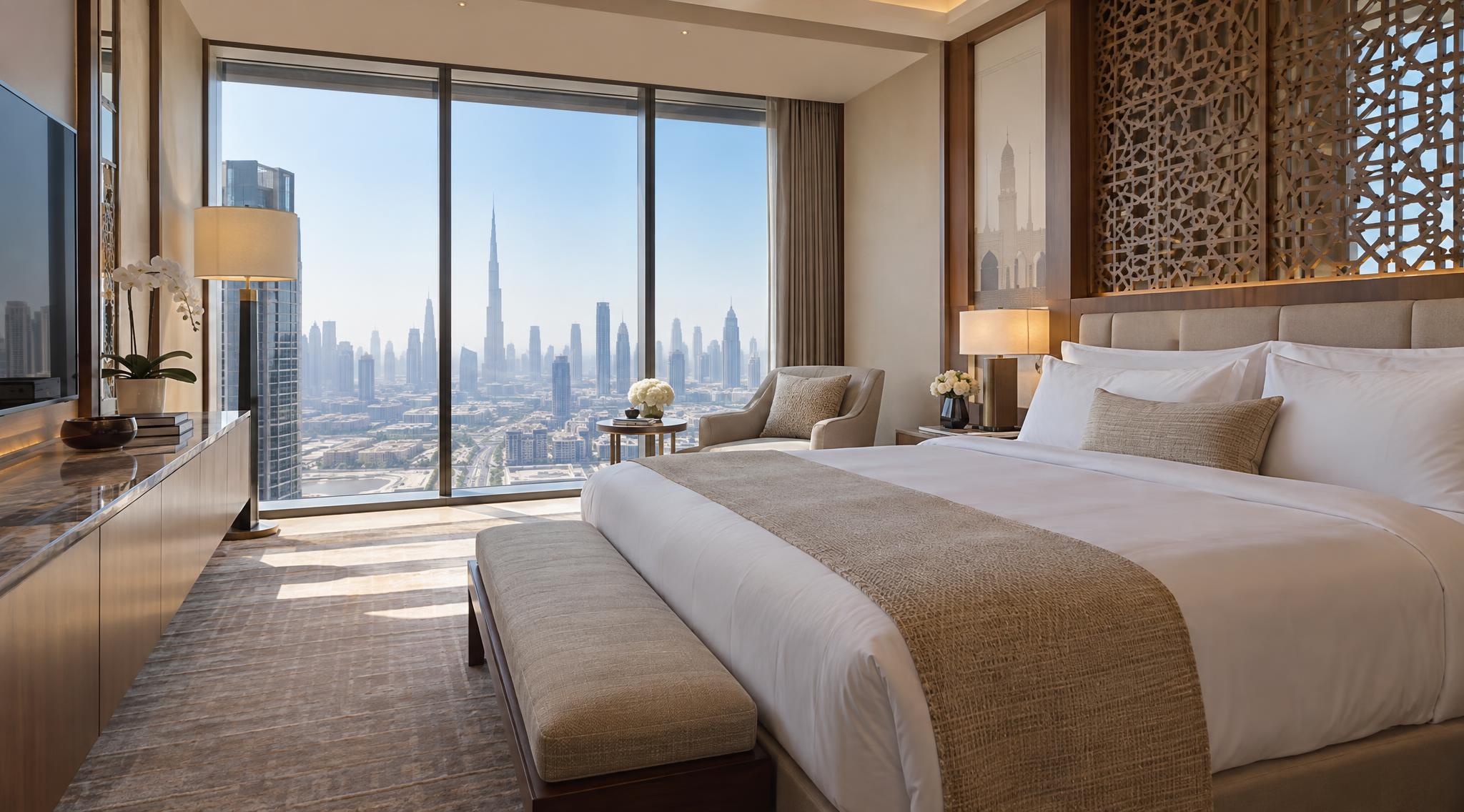
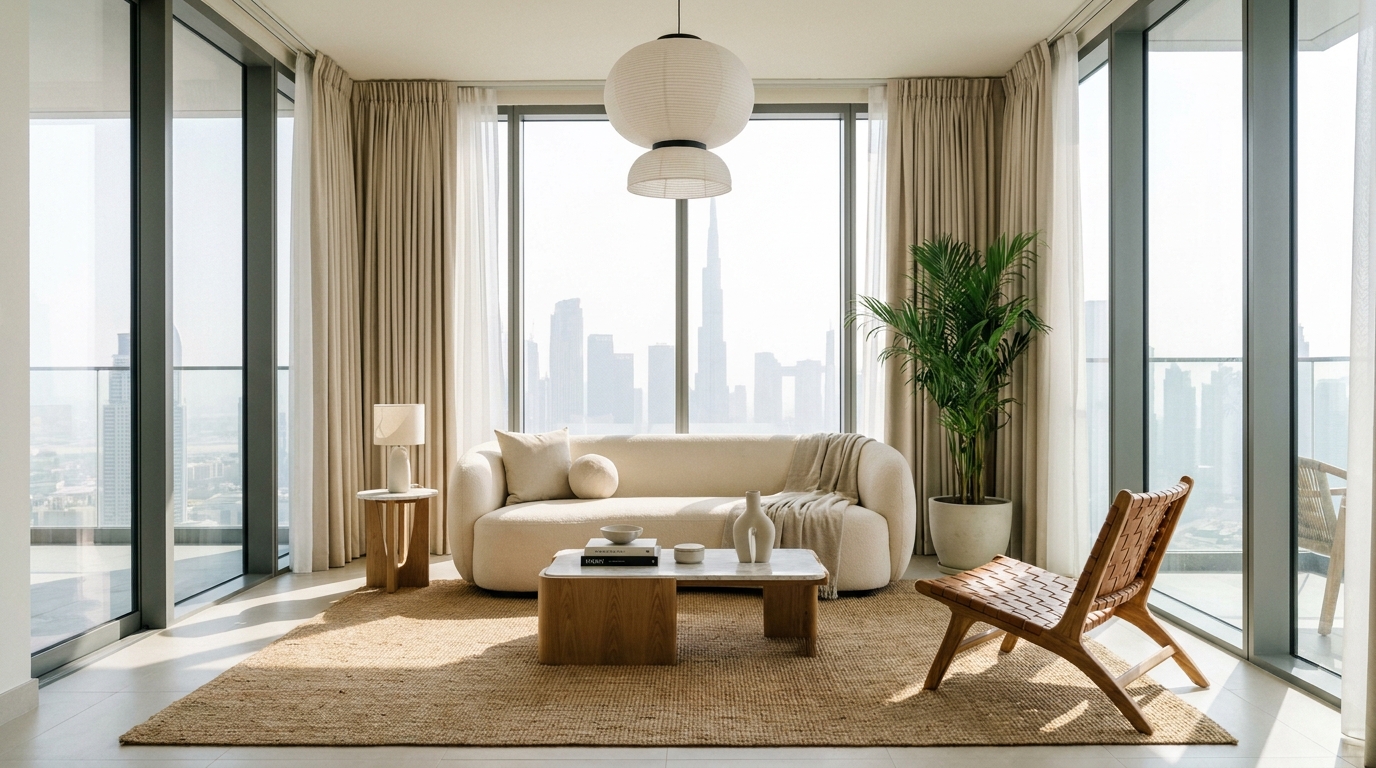
FF&E (furniture, fixtures and equipment) covers the movable items that furnish a space and are recorded as fixed assets: beds, seating, tables, casegoods, loose lighting, artwork, mirrors, curtains, carpets, and in-room equipment such as televisions and safes.
OS&E (operating supplies and equipment) covers what a property needs to open and trade, and keeps replacing: linen and towels, crockery, glassware, cutlery, guest amenities, uniforms, housekeeping trolleys and kitchen smallwares.
A simple test for FF&E: turn the room upside down, and whatever falls out is FF&E. Built-in joinery, fixed lighting and sanitaryware stay where they are, so they belong to the fit out. Of the items that fall out, anything that is used up, laundered or routinely replaced is OS&E.
| FF&E | OS&E | |
|---|---|---|
| Covers | Furniture, fixtures, in-room equipment | Linen, tableware, amenities, uniforms, smallwares |
| Budget | Capital budget | Initial stock in the pre-opening budget, replenishment from operating costs |
| Accounting | Fixed asset, depreciated, typically over five to ten years | Replenishment expensed as an operating cost |
| Specified by | The interior designer, in the FF&E schedule | The operator’s brand standards and pre-opening team |
| Bought by | The owner, through an FF&E tender or the fit-out contractor | The owner or operator, usually outside the construction contract |
| Ordered | Once the specification, samples and mock-up room are approved | Closer to opening, then replenished for the life of the property |
| What sets the timeline | Production and shipping | Quantities, par levels and branded items |
Where the line falls in a hotel room
Most items sort themselves. A few do not, and those are where scope arguments start.
| Item | Category |
|---|---|
| Bed, headboard, bedside tables, desk and chair | FF&E |
| Bedside lamp | FF&E |
| Kettle, cups and tea tray | OS&E |
| Television and in-room safe | FF&E |
| Minibar fridge | FF&E (its contents are food and beverage stock, so neither) |
| Curtains and blackout blinds | FF&E |
| Bed linen, towels and bathrobes | OS&E |
| Hangers, waste bins and guest amenities | OS&E |
| Luggage rack | FF&E |
| Hairdryer, ironing board, in-room coffee machine | Either, depending on the brand standard |
The items in the last row are the ones to settle early. The operator’s brand standards usually decide them, and the decision belongs in a responsibility matrix agreed before anything is tendered. Without one, borderline items are either bought twice or not bought at all.

Where the line falls in a restaurant
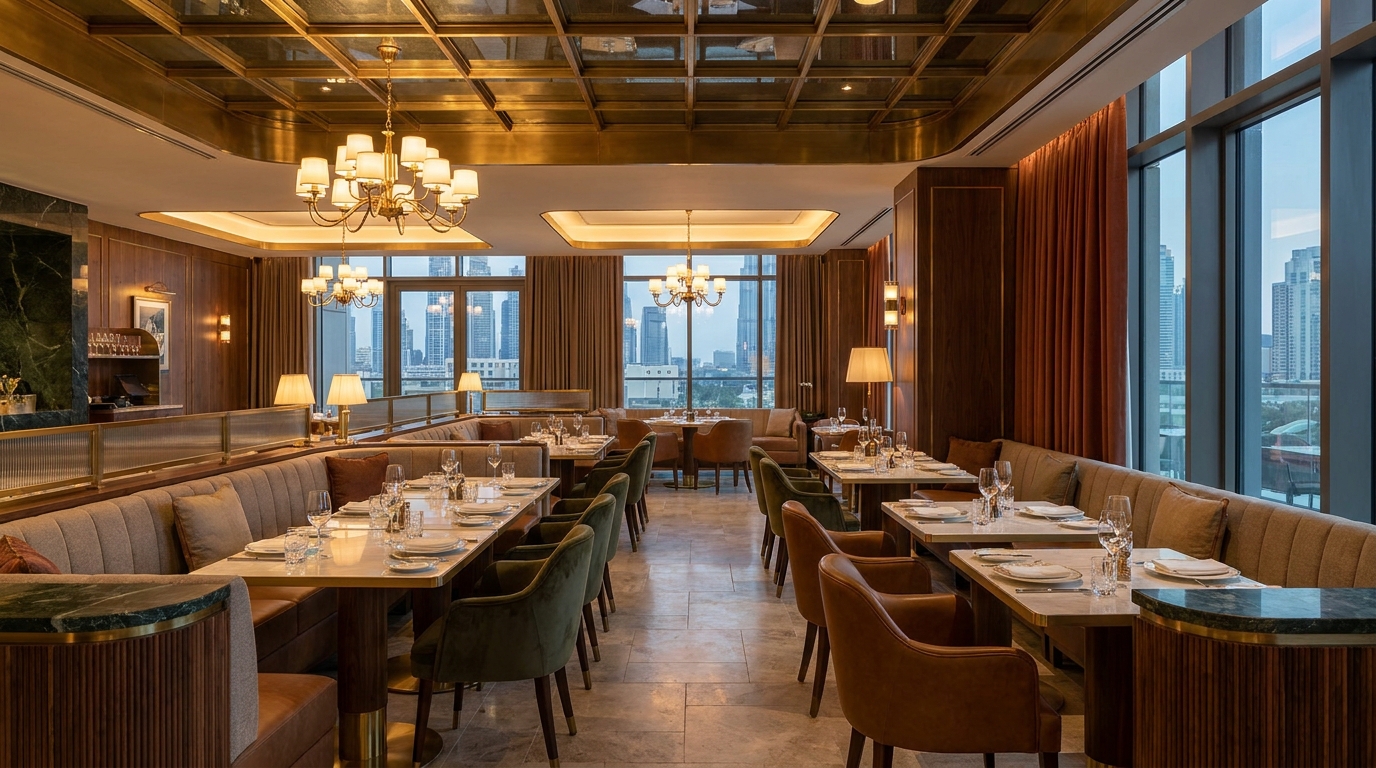
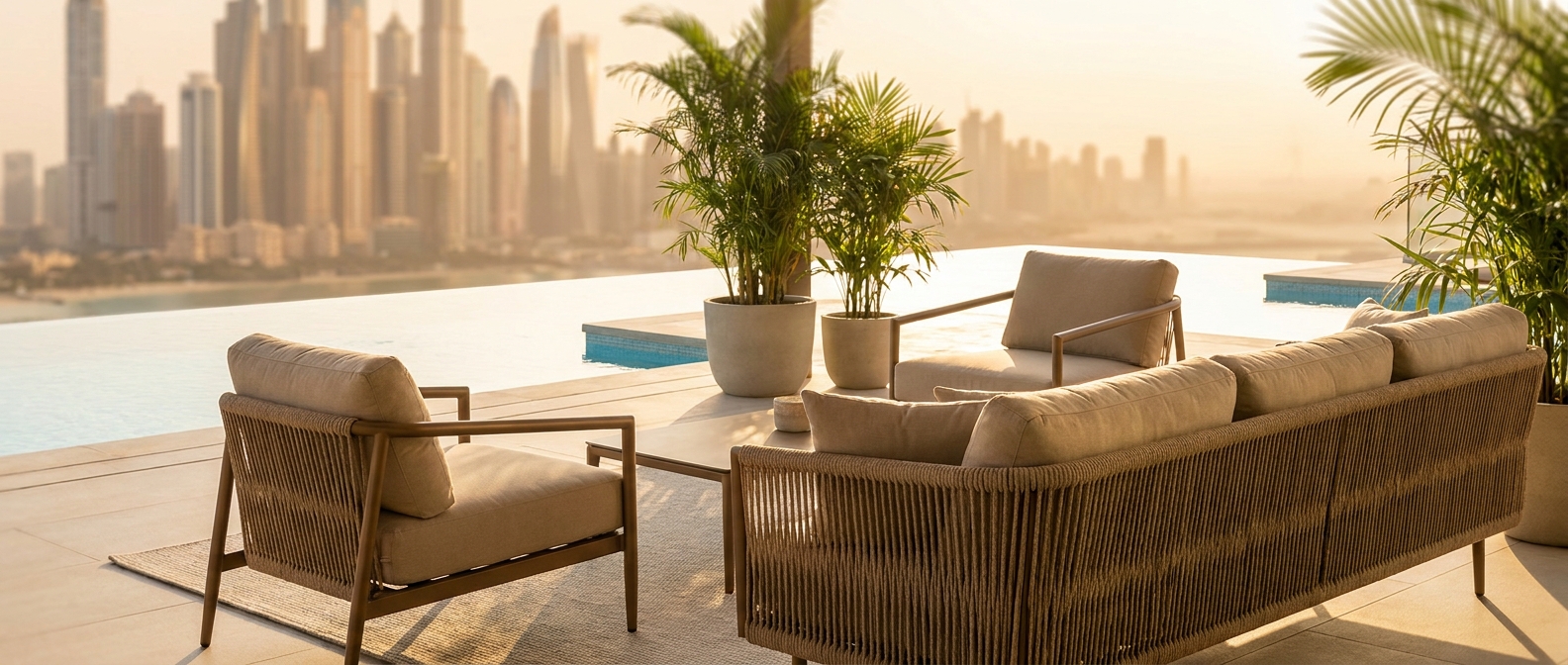
FF&E: dining chairs, tables and bases, banquettes, bar stools, decorative and loose lighting, host stands, artwork, and outdoor furniture and umbrellas.
OS&E: crockery, cutlery, glassware, table linen and napkins, menu covers, trays, condiment sets, uniforms, and kitchen smallwares such as pans, utensils and storage containers.
Kitchen equipment is usually neither. Ranges, refrigeration and dishwashers tend to form a separate package, specified by a kitchen consultant and coordinated with the MEP works. Give it its own line in the budget so it does not fall between the other two.
On a UAE terrace, outdoor FF&E also has to survive the climate, so frame materials, fabrics and finishes belong in the specification from the start. We cover this in How to Choose Outdoor Furniture That Survives the UAE Climate.
FF&E and OS&E in construction contracts
On a construction or fit-out project, the contract decides who buys what. Three arrangements are common in the UAE:
- FF&E inside the fit-out contract. The main contractor procures the furniture package and buys from suppliers as a subcontract. Price and the contractor’s programme carry most of the weight.
- FF&E tendered separately. The owner or operator keeps the furniture out of the construction contract and tenders it as its own package, sometimes through a procurement agent. Landed cost, lead time, quality and service decide it.
- OS&E with the operator. OS&E almost always sits with the owner or the operator’s pre-opening team, outside the main contractor’s scope.
The responsibility matrix records each item with one of a few standard codes: CFCI (contractor furnished, contractor installed), OFCI (owner furnished, contractor installed) and OFOI (owner furnished, owner installed). FF&E can fall under any of them. OS&E is almost always OFOI.

How FF&E is procured
On a hotel-scale project, the sequence runs back from the opening date:
- Budget and standard. The owner, operator and designer agree the quality level and the money, roughly 12 to 18 months before opening.
- Specification. The designer issues the FF&E schedule: item codes, quantities, finishes and fabrics. It becomes the BOQ that every supplier prices against. A specification written around one manufacturer’s dimensions narrows who can bid, so it pays to check it against more than one source before issue.
- Prequalification. An RFI goes out, or the bidder list is drawn from an approved vendor list: company profile, project history and capacity, with no pricing. The list closes before any tender document is issued.
- Tender. An RFQ when the scope is fixed and only price and lead time vary. An RFP when the buyer also wants to see approach and programme. An ITT on government and large construction work, with heavier compliance requirements.
- Bid levelling. Submissions are compared on landed cost rather than unit price: product, freight, UAE customs duty at 5% of the CIF value, installation, lead time and warranty. A low unit price with a long lead time often loses at this stage.
- Samples and mock-up room. Physical approval against the specification, roughly 6 to 9 months before opening, with the operator signing off.
- Award, then the LPO. Followed by production, shipping, delivery, installation and snagging.
For European brands, production and sea freight together set the delivery date. On Italian collections such as Pedrali and Fantoni, that typically means two to three months from confirmed order to the UAE, which is why lead time belongs in the evaluation from the first quote. For the supplier side of this, see Hotel Furniture Suppliers in Dubai: Eight Checks Before You Invite a Bid.
How OS&E is procured
OS&E runs on a different logic: many suppliers, many small lines, and quantities that depend on how the property will operate.
- The list comes from operations. The operator’s brand standards and pre-opening team define what is needed and to what standard.
- Quantities are set by par levels. Linen, for example, is normally bought at three par or more: one set in use, one in the laundry and one in store.
- Supply is spread across specialists. Linen, tableware, amenities and uniforms usually come from different suppliers, so receiving, storage and distribution before opening need planning of their own.
- Branded items set the timing. Logo crockery, printed amenities and uniforms carry their own production times, so the OS&E list has to close months before opening, not weeks.
- After opening, it becomes inventory. Stock counts, replenishment and supplier performance move to the operating budget.
Common mistakes
- Leaving OS&E until after handover. The rooms are ready and the property cannot trade.
- No responsibility matrix. Borderline items are duplicated or missed, and both cost money late in the programme.
- Comparing FF&E bids on unit price. The cheapest quote can carry the longest lead time or exclude freight and installation.
- Mixing capital and operating costs. OS&E booked as capital, or FF&E run through operating costs, distorts the budget and the depreciation schedule.
FAQ
What does OS&E stand for?
Operating supplies and equipment: the items a property needs to open and trade, such as linen, tableware, amenities, uniforms and housekeeping equipment.
What is OS&E in construction?
On a construction project, OS&E is the operating stock that sits outside the building and fit-out works. It is normally procured by the owner or operator rather than the main contractor, and recorded as OFOI in the responsibility matrix.
Is a television FF&E or OS&E?
FF&E. Televisions, safes and minibar fridges are in-room equipment with a long service life, recorded as fixed assets.
Is kitchen equipment FF&E?
Usually neither. Commercial kitchen equipment tends to be a separate package, specified by a kitchen consultant and coordinated with the MEP works.
What is the difference between FF&E and OS&E in a hotel?
FF&E furnishes the rooms and public areas and lasts for years. OS&E is what the hotel uses to operate every day, and it is replaced continuously.
Planning an FF&E package
We supply FF&E for hotels, restaurants and offices across the UAE, buying direct from Italian and European brands including Pedrali and Fantoni, with sourcing, shipping and installation handled by one team.
If you are planning a fit out and the furniture package is still open, talk to us.